ESP32 Home Assistant display
A 3.5" touchscreen desk dashboard for Home Assistant, plus a self-hosted designer that builds its screens from your entities and flashes the firmware over Wi-Fi. Everything runs on the local network.
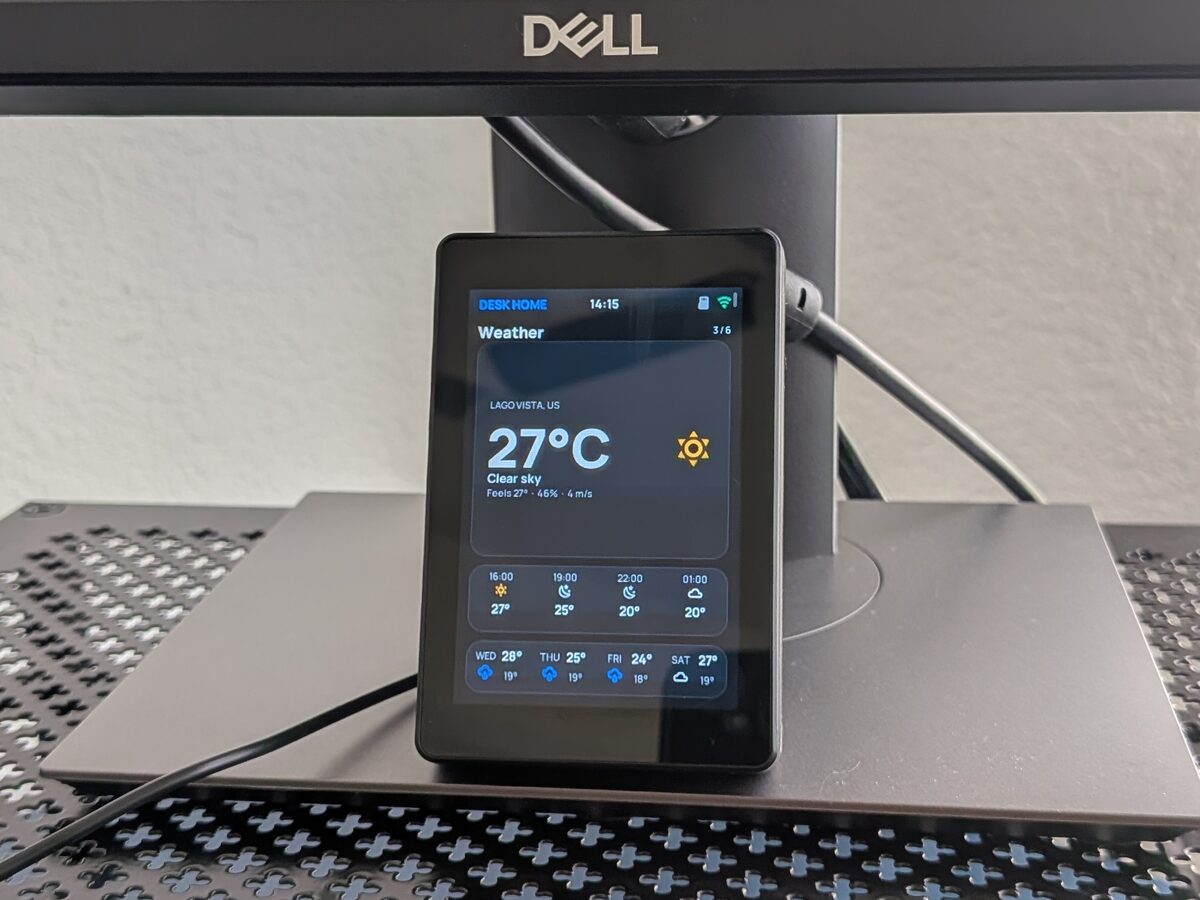
hardware
- Board: Guition JC3248W535, an ESP32-S3 with 16 MB flash and 8 MB PSRAM
- Display: 3.5" 320×480 panel with capacitive touch
- Onboard: microSD card slot, speaker connector with an I2S amplifier, battery connector
- Software: ESPHome with LVGL for the UI
designer
Instead of hand-editing YAML, screens are put together in a small web app that runs in Docker next to Home Assistant. It reads the entity list from Home Assistant, so you search for a sensor, light, cover or camera and add it to a screen. A preview shows the screen as the display will draw it. Build firmware generates the ESPHome config, compiles it and installs it over Wi-Fi.
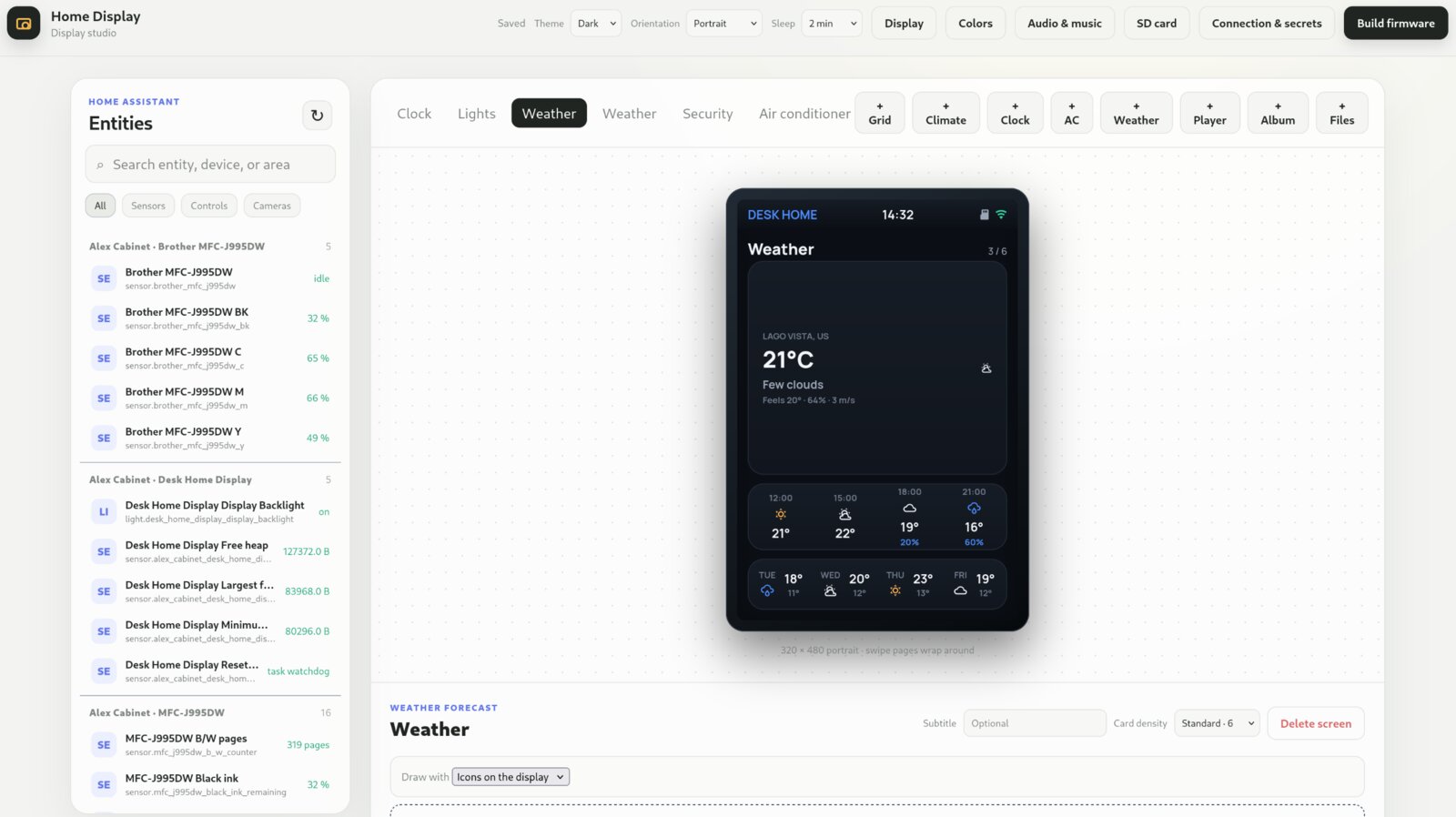
how-it-works
- Fully local. The display talks to Home Assistant over ESPHome’s encrypted native API. Tapping a card calls a Home Assistant action directly, with no cloud in between. The one exception is weather, which comes from OpenWeatherMap over the internet.
- Screen types: sensor grid, room/climate overview, clock, AC/thermostat, weather forecast, music player, photo album and an SD card file browser. Swipe to switch screens; they wrap around.
- Cards show a value, toggle a light or switch, open a cover, or show a camera snapshot.
- History: tap a sensor card for a 24-hour chart, pulled from Home Assistant’s recorder.
- Audio: internet radio and a music library through the speaker. The player also shows up in Home Assistant as a media player, so it can play TTS announcements.
- microSD: browse the card, view pictures and play audio files straight off it.
- Themes: dark and day palettes, portrait or landscape, and a brightness slider you pull down from the status bar.
fun-fact
The board has no published schematic for the microSD slot. I found the pins by disassembling the stock Guition firmware, which calls SD_MMC.setPins(12, 11, 13) and mounts the card in 1-bit mode.